


This is deeply sinister.
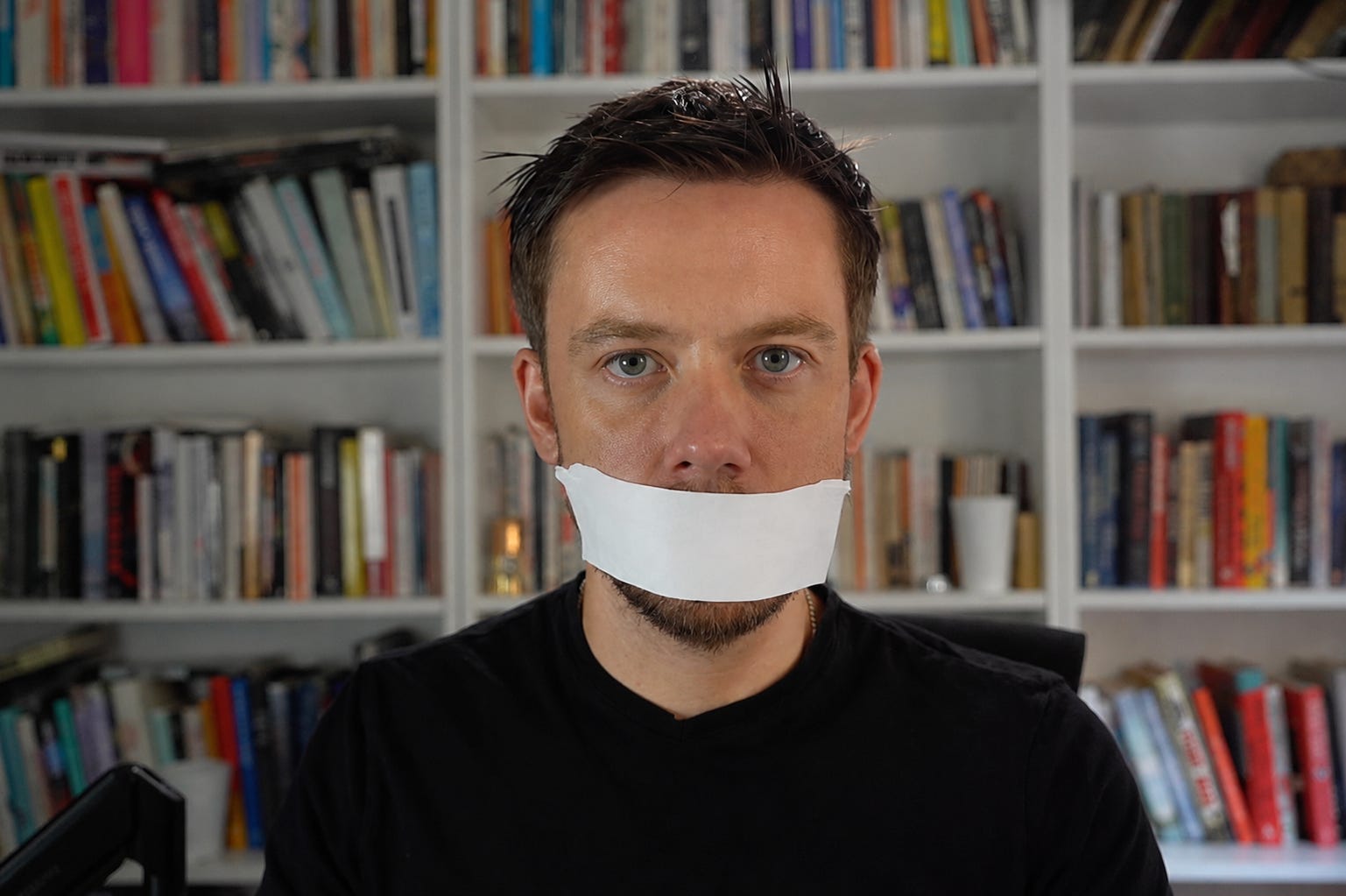
The government is considering legislation which, in practise, could silence independent journalists like myself.
They’ve published a Green Paper that outlines plans to require social media platforms to make a select group of “trustworthy” news outlets more prominent and discoverable in searches, recommendations, and feeds.
The government would decide which news organisations are judged to be more “trustworthy”.
This would, in practise, suppress the content of independent journalists such as myself - as well as other left-wing media outlets.
This could mean my journalism challenging the status quo would disappear from your feed. That includes my work challenging Israel’s genocide in Gaza; opposing disastrous wars; confronting the rise of the far right and fascism; exposing the injustices of capitalism; scrutinising Labour and the Democrats; and platforming voices you rarely hear in the mainstream - Palestinians, Jewish anti-genocide activists, anti-war Iranians, dissenting academics, economists, experts on war crimes.
It would also suppress my work challenging the journalism of the mainstream outlets judged “trustworthy” by the government - whose output would now be boosted.
This could include YouTube as well as, say, Instagram and Facebook.
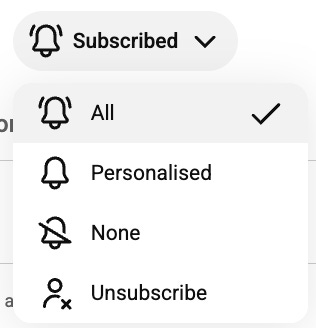
So before we continue - make sure you don’t just subscribe to my channel. Click on the subscription bell and choose ‘All’, rather than ‘Personalised’. If you don’t, my work could vanish from your feed.
So what the hell is going on?
Last month, the government published a document with the grandiose title: ‘Watch this space: a new strategic direction for UK media.’
It is a Green Paper: a document through which the government tests policy proposals and gathers responses before deciding whether and how to legislate.
It isn’t law - yet. The criteria have not been decided, and the government says it will develop its final policy positions after the consultation. But this is not an idle thought experiment either. It is an official proposal, published on 23 June, with the consultation closing on 31 August.
The government says it will “explore legislative options” for a new prominence regime, applying to social media platforms and potentially video-sharing platforms. That would require them to make designated news content prominent and discoverable within their interfaces.
They define “prominence” as giving certain content a “privileged position” - and, as an example, suggests this means “ensuring a specific channel appears at the top of search results or features on a recommendation feed.”
Under proposals under consideration:
the government creating official criteria for determining which providers qualify as trustworthy;
qualifying national and local publishers could be included alongside public-service organisations such as the BBC, ITV, STV, Channel 4 and Channel 5;
imposing the desired outcome on platforms while allowing them some flexibility over its technical delivery;
operating the intervention continuously or activating it during periods of crisis or “heightened vulnerability”;
and deciding whether users should be permitted to switch the intervention off.
The core principle is extraordinary.
The government is considering the creation of a legally privileged tier of news organisations whose journalism would be given preferential access to the public.
Who gets to decide what “trustworthy” means?
The government has not yet decided.
It says one possible starting point is the definition of a “recognised news publisher” in the Online Safety Act.
The likes of the BBC would automatically be recognised.
According to the White Paper publishers must satisfy a checklist, which means that publishing news must be their principal purpose; their material must be produced by different people and under editorial control; they must have a standards code, a complaints process, a UK business address and an identifiable person with legal responsibility.
This may all sound super reasonable. What it means in practise is that large, well-funded outlets are prioritised.
A large institution could satisfy all of these requirements and still publish journalism that is misleading, inaccurate, biased, deferential, and/or catastrophically wrong.
The BBC’s coverage of Gaza shows exactly why this is dangerous
For example, I spent months working on a detailed investigation for Drop Site News into the BBC’s coverage of Israel’s assault on Gaza.
It was based on interviews with 13 current and former BBC staff, an examination of internal complaints and a quantitative assessment of its reporting. It documented what those journalists described as a structural imbalance: greater credulity towards official Israeli narratives; a systematic devaluation of Palestinian life; the sidelining of specialists in war crimes; a failure to connect individual atrocities to an overarching strategy; and a tendency to frame events through Israel’s claimed right to self-defence, with proportionality treated as a secondary debate.
My own journalism is always vigorously evidence-based. On the question of Israel’s genocide, my work was far more accurate than the BBC’s much better-funded output. I exposed atrocities and genocidal plans they ignored; platformed the work of experts and organisations they sidelined; and combatted Israeli lies they amplified.
I explained from the start what Israel’s actual genocidal intentions were. The BBC’s approach was to portray Israel’s genocidal onslaught as a war of self-defence, with a side debate about whether its actions were “proportionate” enough.
The point is that - under the government’s plans - the BBC’s work on Israel and Palestine would be prioritised over my own.
That wouldn’t be based on comparing the evidence or the accuracy of each piece of work. It would simply be based on the BBC being judged as inherently “trustworthy” - and thus prioritised over my own work.
You do not have to delete somebody to suppress them
The government’s defence will be obvious.
Nobody is being censored, it will say. Nobody’s videos are being deleted. Independent journalists will remain free to publish.
But you do not have to physically remove somebody’s work to suppress its reach.
Imagine two people speaking through microphones. The state orders one microphone to be turned up and leaves the other barely audible. Technically, both people are still allowed to speak. In reality, only one is being heard.
A video that is never recommended, rarely appears in search results and is excluded from the feeds of potential viewers may remain online while becoming effectively invisible.
The speech has not been prohibited. The audience simply rarely encounters it.
That means fewer views, fewer subscribers and less revenue.
For large broadcasters with multiple sources of funding and distribution, YouTube reach is useful. For many independent publishers, it is existential.
“Official” journalism is not the same thing as trustworthy journalism
There is another fundamental problem.
Too much political journalism is built around access: private briefings, anonymous quotes, lobby relationships, off-the-record lunches and the hope of securing the next exclusive.
This “access” journalism deters reporters from saying things which might upset politicians - because they risk being frozen out.
I spent years scrutinising Keir Starmer and Labour’s leadership. I warned what would go wrong before much of it did. Compare and contrast what I said to the analysis of mainstream outlets.
They applauded Starmer for his deceitful, factional war on the left - without diagnosing the lack of vision or strategy for the country. They were invested in the idea that Starmerism represented competent, stable, sensible government.
I have my contacts, but I am not dependent on access to ministers, party machines and official sources. Neither do I have a worldview that is deferential to power.
Yet my political journalism faces being suppressed in favour of work which was discredited by events time and time again.
“Crisis mode”
The consultation asks whether this system should be permanently switched on or activated only during periods of “crisis” or “heightened vulnerability”.
Elsewhere, the Green Paper points to periods of “community tension, social unrest and democratic events”. It also asks whether users should be allowed to switch the intervention off.
Would an election count? A wave of riots? A mass protest against a government policy? A huge strike movement? A terrorist attack? A public-health emergency? A constitutional confrontation? A disastrous war in which the government itself was involved?
These are my examples, not situations specifically listed in the document. But that is precisely the problem: the boundaries have not been defined.
Imagine a government leading the country into a catastrophic war and activating a system that privileges officially recognised broadcasters over independent anti-war voices.
Imagine a mass movement against an unjust law, while reporting sympathetic to the government receives greater algorithmic weight in the name of responding to social tension.
Imagine an election during which established outlets broadly share the assumptions of the political class, while those challenging its record are pushed further from public view.
No videos are banned. No journalists are arrested.
The volume is simply turned down.
There is a real problem. This is the wrong solution.
It’s obviously not the case that there isn’t an underlying problem.
Algorithms can promote inflammatory nonsense, calculated lies and blatant disinformation to mass audiences. Business models based on engagement reward content which provokes fear and rage, regardless of whether it is true.
The Green Paper notes the violent unrest following the Southport murders - in which there was essentially an attempted national pogrom. It cites Ofcom’s assessment that algorithmic recommendations helped spread misleading and divisive narratives.
That deserves a serious debate.
Platforms should be forced to disclose far more about how recommendation systems operate. Their algorithms should undergo independent audits. Qualified researchers should receive access to the data needed to investigate systematic harms. Users should be offered chronological and genuinely subscription-based feeds rather than being trapped inside opaque profiling systems.
But none of that requires the state to dictate which news organisations and journalists are deemed trustworthy.
Indeed, note that many mainstream media outlets promote inflammatory disinformation and hatred - and there’s no meaningful action being taken there to deal with that.
Think of the precedent
Imagine what a right-wing authoritarian government would do with this precedent. They would simply reclassify right-wing outlets as “trustworthy” - promoting propaganda in their favour, and suppressing their critics.
For those who think we’re scaremongering, note how critics of anti-terrorism legislation argued that it would end up being used against protesters and activists who are clearly not terrorists. That is exactly what ended up happening - with the proscription of Palestine Action as the most striking example.
We need to act before this becomes law
You can respond either by:
Going to the official consultation page and clicking ‘Respond online’ under ‘Ways to respond’. You can answer as many or few questions as you like - you don’t need to complete the whole thing.
By email: send a response to watchthisspace@dcms.gov.uk.
The deadline is 11:59pm on 31 August 2026.
The directly relevant section is “Prominence of news on social media”, particularly:
Question 4: should “trustworthy” news be made more visible?
Question 4a: how should access to trustworthy news work in practice?
Question 5: should prominence be permanent or activated during periods of crisis?
Question 6: should users be allowed to switch it off?
This isn’t a defence of the tech bros and their secretive, profit-driven algorithms. Their systems urgently democratic regulation.
That means transparent, pluralistic and accountably regulation.
It doesn’t mean the government dictating which institutions to promote - and which to turn down the volume.
This is typical of the present UK government, and I’ve no doubt would be approved of by the tory, reform, and restore parties. They appear to be the political parties pushed by the establishment, elite,and epstein class. All of them want to be able to lie more easily, by controlling journalism. They do not like the fact that people know already that they control mainstream media, and also don’t like the fact that therefore many of the population now get their news via independent journalists. This is their answer; to curtail personal choice in the way that they are already limiting our rights to free speech, juries in courts, and to protest. As you say, this is extremely dangerous. We all see police brutality against pro-Palestinians. Most people are able to tell right from wrong, and know absolutely that genocide is wrong. Despite that the government persists in its abominable choice to support two terrorist pariahs - the usa and israel. Anyone sane knows that this decision is both unacceptable, and insupportable. No doubt this idea was proposed by them. I will be most surprised too if it is rejected by burnham. The UK is being moved towards authoritarianism; this must be stopped.
Owen, all that is needed is a constitutional requirement that all political and media communications be "fair, clear, and not misleading" - copied verbatim from UK financial services law about advertising. Just google "fca handbook advertising rules" and you will see.
As you say, there is a problem, and the government's proposal is the wrong solution. My solution protects our rights, puts paid to disinformation, and makes the social media outfits liable for accuracy.